The short answer
It’s one of the questions we hear most often at the farm: can you lay new turf straight over the old lawn and skip the digging?
The short answer is no — not if you want the new lawn to last.
Old grass left underneath doesn’t quietly give up. It grows back through your new turf, and you’re left with two grasses competing for the same patch. The proper prep takes about a fortnight, and it’s the difference between a lawn you lay once and one you end up redoing.
Why the old grass comes back
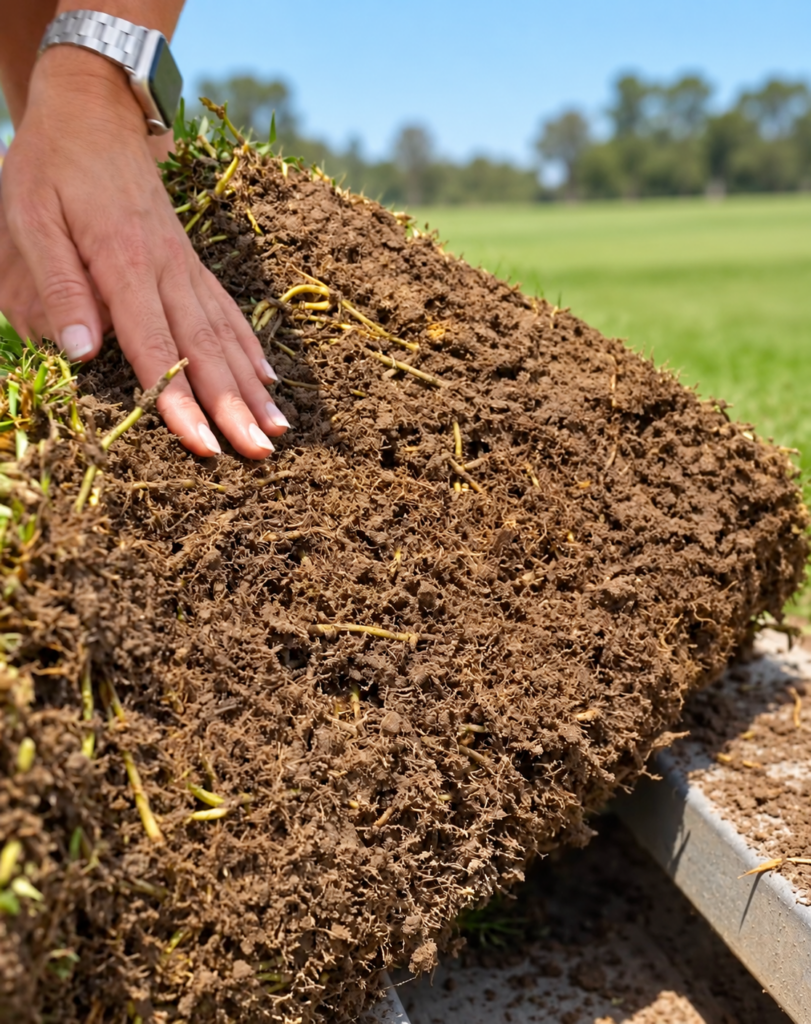
A lot of lawn grasses — couch varieties in particular — don’t only grow from the leaf you can see. They spread through roots and rhizomes, the underground runners that sit below the surface.
That’s why simply digging out an old lawn isn’t enough either. As Dean puts it: “If you don’t spray it out and you just dig it out, you’ll get most of it, but because a lot of couch varieties grow from root or from rhizomes, you’ll quite likely get that existing grass growing through your new stuff — which you definitely don’t want.”
Laying over the top is worse again. Every one of those rhizomes stays in place, and it will find its way up through the new turf.
Step 1: Spray out the old lawn
The first job is to kill the existing grass — roots, rhizomes and all.
Dean’s approach is a glyphosate herbicide such as Roundup, mixed with a good wetting agent and sprayed over the whole lawn. The wetting agent helps the spray stick to the leaf and soak in, rather than beading and running off. Always follow the label directions for mixing and safety.
Then give it time. About a fortnight after spraying, the grass should be dead enough to start removing. Don’t rush this step — it’s the one that stops the old lawn coming back.
Step 2: Dig it out
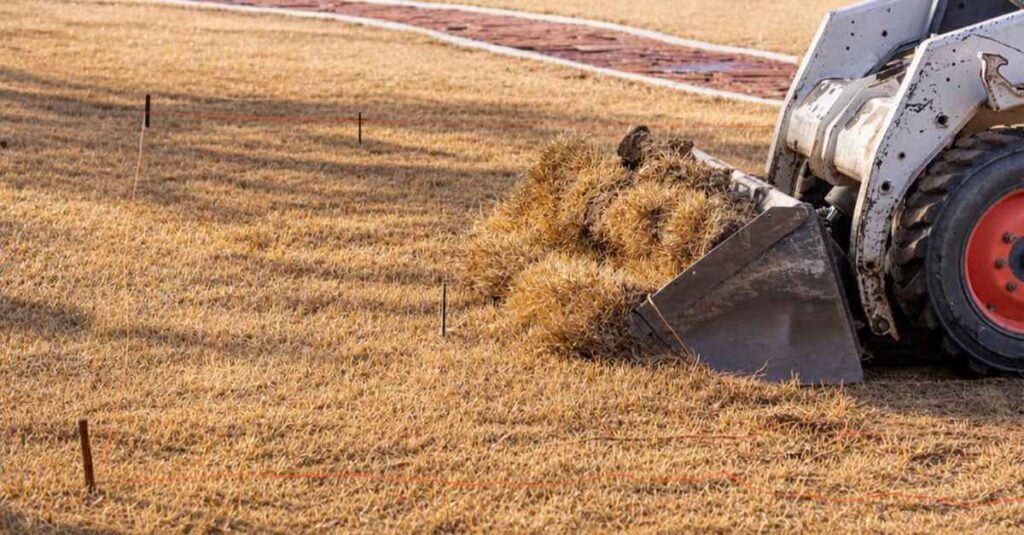
Once the old lawn has died off, it’s time to remove it. For most yards that means machinery — an excavator or a bobcat makes short work of it. For a small area, a turf cutter or a flat spade will do the job.
Because the grass has already been sprayed, anything left behind in the soil is far less likely to regrow. That’s what makes the fortnight’s wait worth it.
Step 3: Prepare the ground and lay
With the old lawn gone, you’re starting with a clean slate. This is the moment to get the base right.
- Level it. Bumps and dips show up in a new lawn and make mowing harder. Dean explains how in The Secret to a Perfectly Flat New Lawn.
- Check your soil. Depending on what’s there, you may need a layer of under-turf soil first. See Does Your New Turf Need Under Turf Soil?
- Lay it fresh. Turf is a living product. Have the ground ready before it arrives so it goes down the day it’s delivered.
- Water it in properly. New turf needs the right watering in its first weeks. Avoid The Biggest Watering Mistake for New Turf.
Do it once
Spraying, waiting and digging adds a couple of weeks to your project. It also saves you from pulling up a patchy lawn a year from now and paying for turf twice.
When the ground is ready, we’ll help you choose the right grass for your yard. We grow four varieties at Glass House Mountains — Sir Walter Buffalo, Palmetto Buffalo, Empire Zoysia, Wintergreen Couch. We deliver fresh across the Sunshine Coast and Brisbane, and we can arrange laying if you’d rather leave it to the professionals.
Compare our turf varieties, or call us on 07 5496 9790 and we’ll talk you through it.
Frequently asked questions
Can I lay new turf over existing grass?
No. The old grass will grow back through the new turf, especially couch varieties that spread by rhizomes. Spray it out and remove it first.
How do I kill my old lawn before laying new turf?
Spray it with a glyphosate herbicide such as Roundup, mixed with a wetting agent, following the label directions. Wait about two weeks before digging it out.
How long after spraying can I lay new turf?
Allow about a fortnight for the old grass to die off. Then remove it, prepare the ground and lay.
Can I just dig the old lawn out without spraying?
You’ll remove most of it, but pieces of root and rhizome left in the soil can regrow through your new lawn. Spraying first prevents that.